Meteora is the one place in this series where the planning genuinely matters. Not because it is hard to reach — the bus does that — but because the six monasteries each close on a different day, decided by the monks and changed without notice, and the difference between a good day and a wasted one is a table you could have read in two minutes.
Getting there
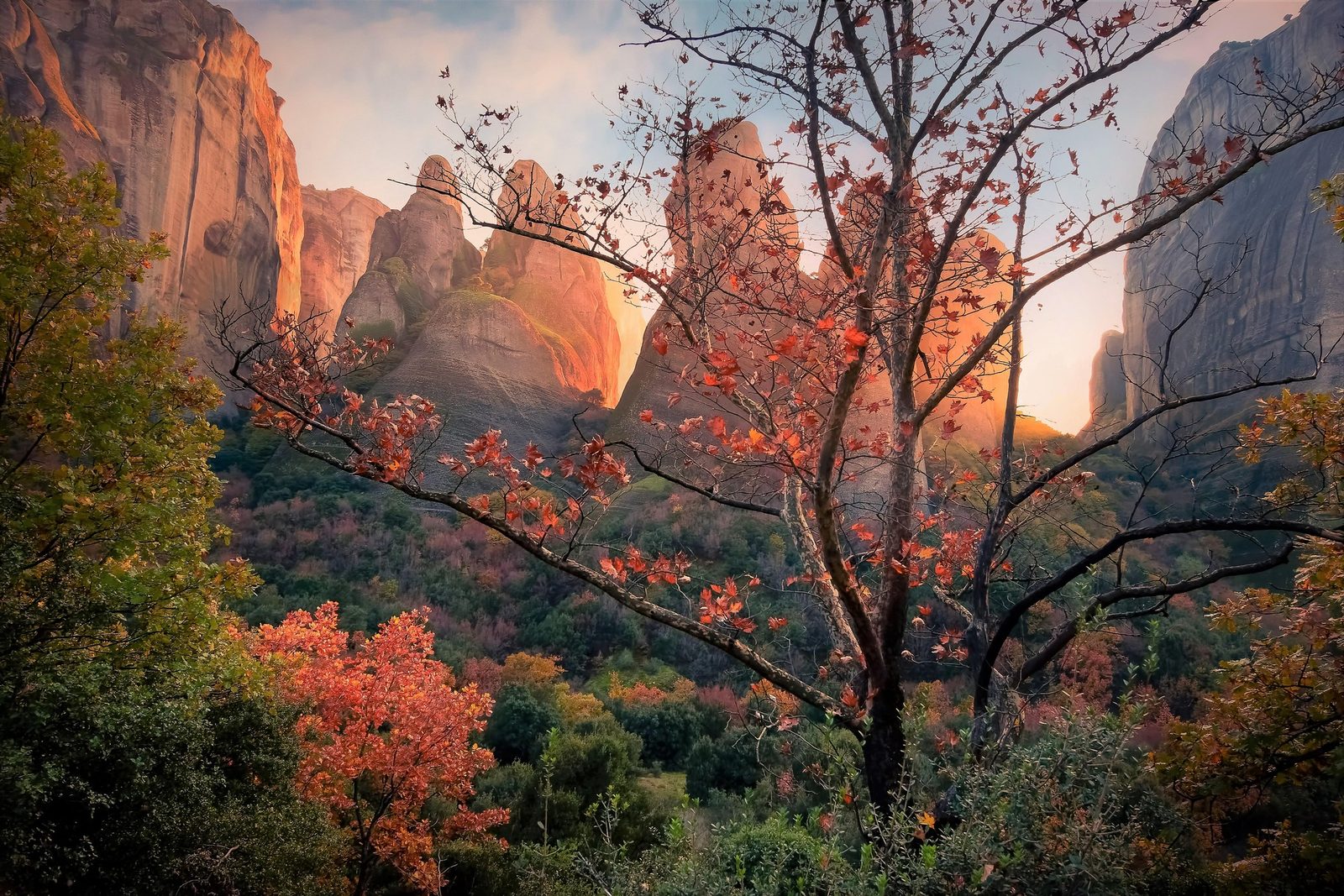
The town at the foot of the rocks is Kalambaka, sometimes written Kalampaka. Its smaller neighbour Kastraki is closer to the rocks and quieter. Either is a fine base.
From Athens: buses leave from Liosion, Terminal B — central Greece and Thessaly — not from Kifissos. It is a long ride, most of a morning. Some services run direct; others change at Trikala, and if yours does, remember that a connection between two KTEL operators is not a protected connection. Leave a real gap.
From Thessaloniki: shorter, and often via Trikala. Meteora is genuinely a plausible day trip from Thessaloniki in a way it is not really from Athens.
The closure table, which is the whole article
Each monastery sets its own hours and its own closing day. There is no coordination between them. These were the published schedules as of mid-2026:
| Monastery | Summer | Winter | Closed |
|---|---|---|---|
| Great Meteoron The biggest, and the busiest |
09:30–15:00 | 09:30–15:00 | Tue and Wed, Thu in winter |
| Varlaam | 09:00–16:00 | 09:00–16:00 | Fri and Thu in winter |
| Roussanou | 09:00–16:30 Sun to 16:00 |
09:00–14:00 | Wed |
| Holy Trinity Steep walk up |
10:00–16:00 | 10:00–16:00 | Thu |
| St Stephen’s Easiest access of the six |
09:00–13:30, 15:30–17:30 | 09:00–13:00, 15:30–17:00 | Mon |
| St Nicholas Anapausas Steep walk up |
09:00–17:00 | 09:00–16:00 Sun from 09:30 |
Fri |
Read that table for the day you are going, then plan around the gaps. Note what it means in practice:
- Saturday and Sunday, all six are open. If you have one day and can choose it, choose a weekend — and accept that everyone else has read the same table.
- Friday costs you two — Varlaam and St Nicholas both shut.
- Winter is thinner than the table looks. Great Meteoron closes three days a week from November, Varlaam two. A Tuesday or Wednesday in January is a poor day to arrive.
- St Stephen's shuts for two hours over lunch in both seasons. It is the easiest to reach and the easiest to arrive at during its closed window.
Practicalities that will catch you out
Bring cash
Entry is €5 per person per monastery, payable in cash at the gate. Four monasteries for two people is €40 in notes, and there is no card machine on top of a rock.
The dress code is enforced
Not loosely. Women need a skirt below the knee and shoulders covered — wrap-around skirts are lent at the entrances, but relying on that at the busiest monastery in August is optimistic. Men need long trousers. Sleeveless tops are not admitted on anyone. Wearing long, light clothes from the start is more comfortable than the alternative in any case.
These are working monasteries
People live and pray in them. Quiet voices, no photography where it is signed, and patience if a service is on.
Three or four is the right number
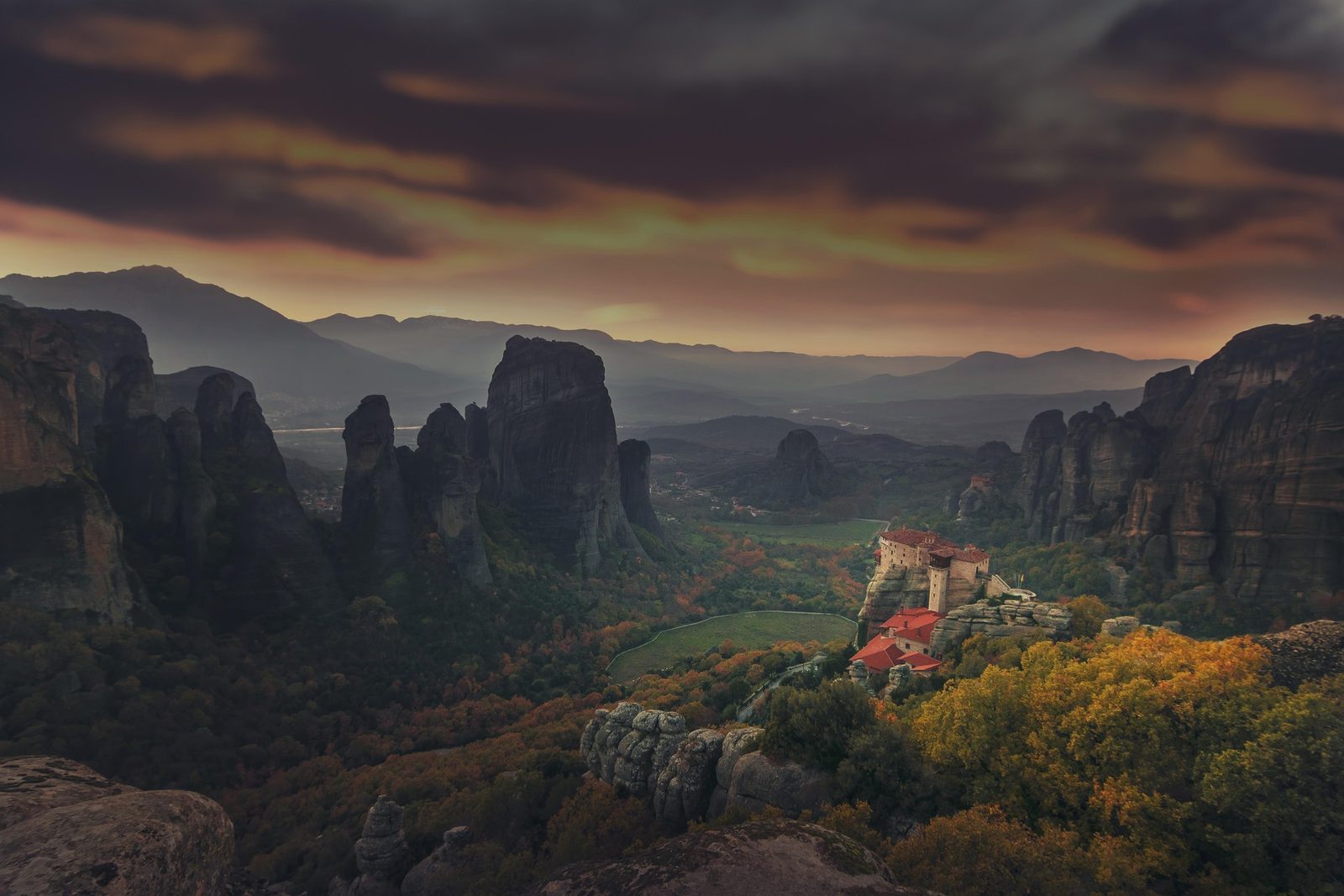
Not six. Each involves a climb of real steps, and by the fourth you will be looking at frescoes without seeing them. Great Meteoron and Varlaam are the two big ones and sit close together. Roussanou is the most photogenic from outside. St Stephen's is the one to pick if anyone in the party cannot manage a lot of steps — it is reached across a short bridge rather than up a staircase carved into rock.
Where to stay, and it matters here
This is the one destination in this series where we would push you firmly towards staying two nights, because the light is the point and the light is early and late.
- Kastraki if you want the rocks, Kalambaka if you want the town. Kastraki is a village directly beneath the pillars — walk out of your door and you are among them. Kalambaka is bigger, has the bus and train connections, more restaurants, and more choice of rooms.
- Pay for the view, and confirm it in writing. “Meteora view” means very different things at different price points. Ask which rocks, and whether it is from the room or from a shared terrace.
- Sunset is the event. Most guesthouses will tell you the current best spot — it shifts through the year — and many will drive you up. Ask on arrival, not on the way out.
- Check how you will get up there. The monasteries are a long uphill from both villages. There is a limited local bus, taxis are readily available and not expensive for the loop, and walking up is a serious hike in summer heat. Plenty of guesthouses arrange a taxi loop that drops you at the top and collects you lower down, which is the civilised answer.
- Two nights beats one by more than you would think. Arrive, walk out at sunset, do the monasteries properly the next morning, leave in the afternoon.
If you have a second day
Walk. There are old monk paths between the rocks that see a fraction of the traffic the road does, and the hermit caves in the cliffs are visible from several of them. Ask locally for the current state of the trails rather than trusting an app — some are well kept and some are not.